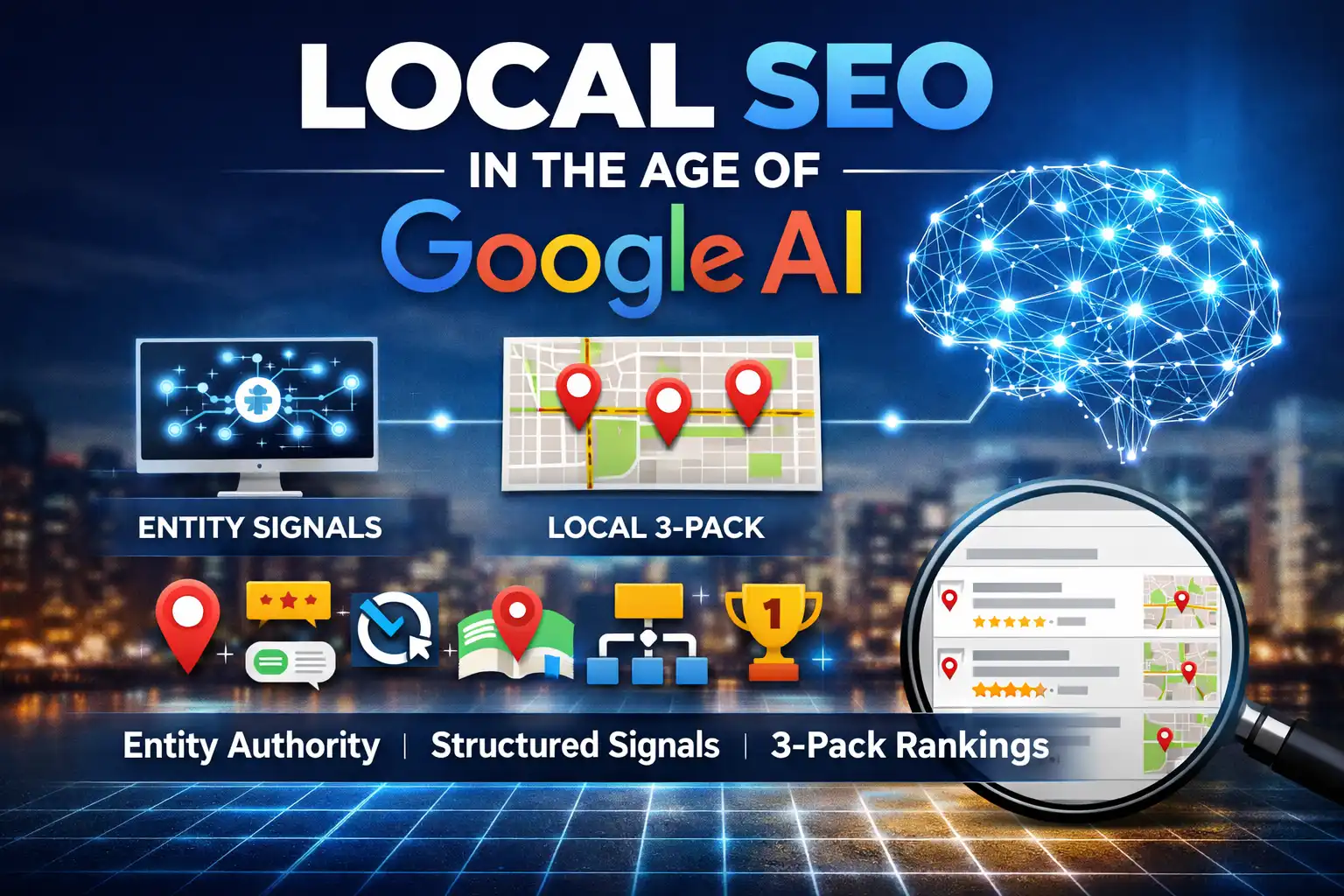
TL;DR: Local SEO Google AI has shifted the way businesses approach rankings, moving from traditional keyword placement to AI-driven entity modeling and structured signals. Google now evaluates your business as a structured entity connected to geography, reviews, engagement data, and competitive grid signals. To win the Local 3-Pack, you must align website structure, Google Business Profile data, reviews, and geographic reinforcement into one coherent authority system.
Local SEO Is No Longer Just Optimization — It’s Entity Engineering
For years, Local SEO meant adding keywords, building citations, collecting reviews, and earning backlinks. That model worked when Google primarily indexed pages.
Today, Google AI models businesses as entities connected to service categories, geographic zones, user intent patterns, engagement history, review language, and competitive positioning.
When these signals align, visibility compounds. When they conflict, rankings stall.
How Local SEO Google AI Evaluates Your Business Today
Google evaluates local businesses through entity consistency and contextual relevance. Key inputs include structured website architecture, Google Business Profile alignment, review keyword clustering, behavioral engagement metrics, geo-grid performance patterns, and category reinforcement signals.
Clarity and alignment drive authority.
Proximity Has Evolved: From Radius to Context
Proximity still matters in Local SEO, but contextual proximity determines visibility. Google analyzes query modifiers, service area coverage, engagement data, category density, and grid-level performance signals.
Two businesses in the same location can rank differently based on how clearly their geographic authority is structured.
Entity Authority in Local SEO Google AI Rankings.
Entity authority replaces isolated ranking tactics as the primary driver of Local SEO performance.
- Topical depth across service pages
- Internal linking that reinforces hierarchy
- Consistency between website and Google Business Profile
- Review alignment with services and location
- Engagement signals compared to competitors
Authority emerges from coherence, not volume.
Reviews as Structured Data Inputs
Reviews are not just reputation assets. Google analyzes them for service-specific language, geographic references, sentiment patterns, and reviewer credibility.
When reviews reinforce your services and locations naturally, they strengthen entity clarity and improve Local SEO performance.
Signal Conflict: Why Rankings Feel Random
Common causes of unstable rankings include inconsistent NAP data, conflicting service descriptions, overloaded categories, sudden structural changes, and misaligned service area signals.
Reducing signal conflict often improves rankings faster than adding new tactics.
Structured Website Architecture as a Local SEO Asset
Your website is a primary authority signal. It should include:
- Clear service-specific landing pages
- Logical sitemap hierarchy
- Internal linking aligned with service categories
- Geographic reinforcement within content
- Consistent metadata
From Raw Signals to a Ranking System
More content and more reviews do not automatically improve Local SEO. Structure determines impact.
- Align website structure with service categories
- Sync Google Business Profile data with on-site messaging
- Reinforce geographic intent naturally
- Guide review language authentically
- Monitor geo-grid performance
Execution Order Determines Visibility
Effective Local SEO requires disciplined implementation. Structured sequencing builds momentum and prevents ranking volatility.
Competing for the Local 3-Pack in an AI-Driven Search Environment
Winning the Local 3-Pack requires entity clarity, structured service architecture, review alignment, geographic reinforcement, and reduced signal conflict.
The Future of Local SEO and AI Search
As AI integration expands, structured data consistency and entity modeling will define sustainable local visibility.
Frequently Asked Questions About Local SEO and Google AI
How does Google AI impact Local SEO?
Google AI models businesses as entities and evaluates structured signals, review content, geographic relevance, and engagement patterns instead of relying only on keywords and citations.
Is proximity still important in Local SEO?
Yes. However, contextual proximity matters more than physical distance. Google evaluates service area coverage, intent modifiers, and engagement signals.
Do reviews affect Local SEO rankings?
Yes. Reviews influence entity clarity, service reinforcement, and geographic authority when structured naturally.
What is entity authority in Local SEO?
Entity authority refers to how clearly and consistently Google understands your business across your website, Google Business Profile, reviews, and external signals.
Wish to Get Your Local Business Bosted? Contact Us Today