Chrome’s Future: How a DOJ Breakup Could Transform Marketing and Search
Melrina Susans
SEO Consultant
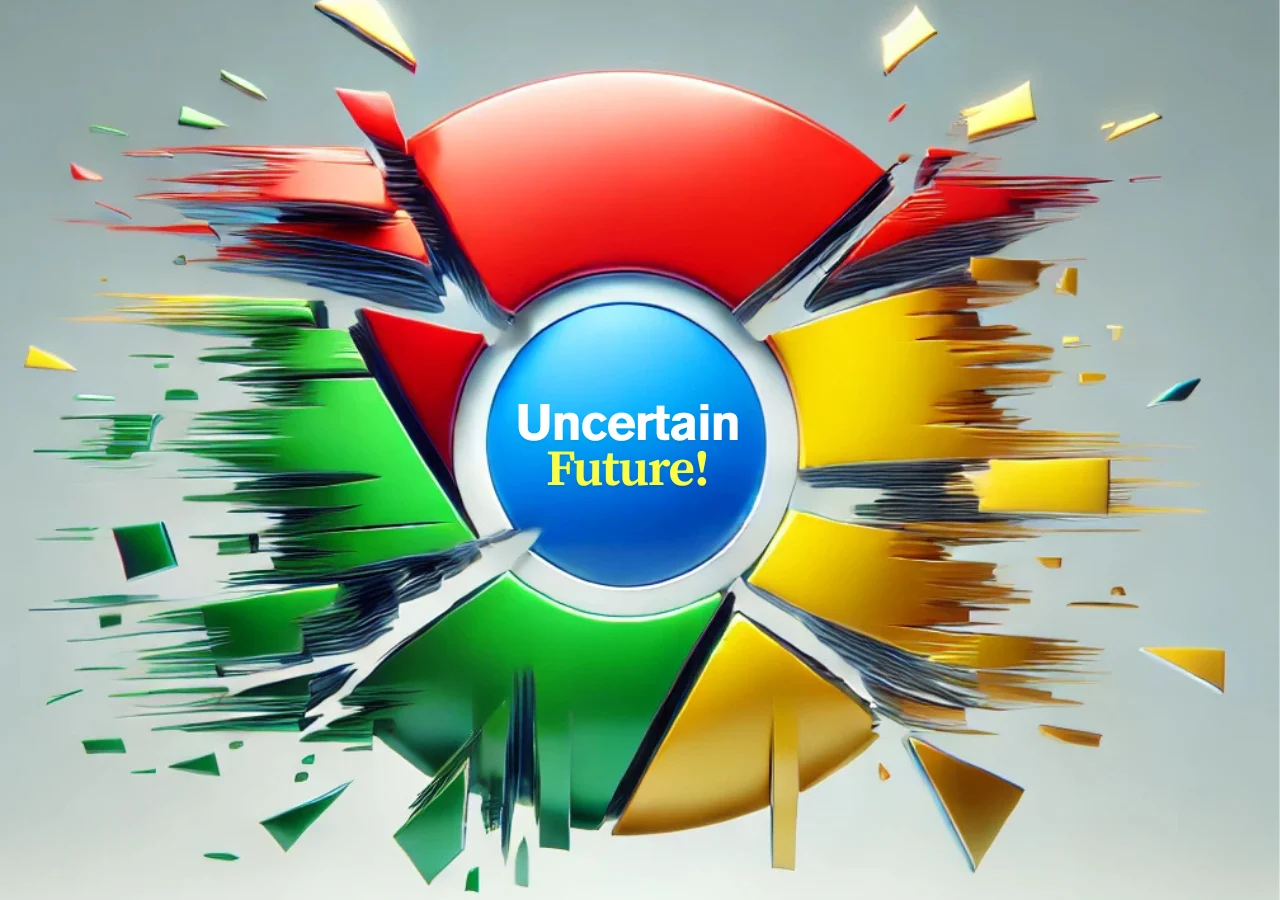
The U.S. Department of Justice’s (DOJ) push to force Google to sell its Chrome browser, as part of a broader antitrust effort to dismantle the tech giant’s dominance in internet search and browser markets, could have profound effects on digital marketing and the local search results market. While the outcome remains uncertain—pending a remedies trial in April 2025 and a final ruling expected by August 2025—the implications hinge on Chrome’s critical role in Google’s ecosystem. Below is an analysis of the potential impacts, grounded in Chrome’s current market position and its integration with Google’s search and advertising infrastructure.
Digital Marketing Impacts
Fragmentation of the Advertising Ecosystem
Chrome, with a global browser market share of around 66% (as of recent estimates) and a U.S. share of about 61%, is a cornerstone of Google’s advertising empire. It drives roughly 60% of Google’s search volume, which in turn generates about 60% of Alphabet’s revenue through search ads. If Chrome is divested:Loss of Unified Data: Google uses Chrome to collect vast amounts of user data—search queries, browsing habits, and more—feeding its ad-targeting algorithms. A standalone Chrome, owned by another entity, might not share this data with Google, weakening its ability to deliver precise, behavior-based ads.
Increased Costs and Complexity: Marketers rely on Google’s integrated stack (Chrome, Search, Ads) for seamless campaigns. Fragmentation could force advertisers to work across multiple platforms, raising costs and complicating campaign management. For instance, a new Chrome owner might prioritize its own ad network or data monetization strategies, disrupting Google’s current dominance.
Rise of Competitors: Retail media networks (e.g., Amazon) and platforms like Meta could gain ground. If Meta, OpenAI, or another tech giant acquires Chrome, they might integrate it with their own advertising systems, shifting market share away from Google. This could benefit advertisers with more options but also create uncertainty as the ecosystem adjusts.
Privacy and Tracking Shifts
Google’s planned phase-out of third-party cookies in Chrome (already delayed multiple times) is tied to its Privacy Sandbox initiative, which keeps ad targeting within its control. A divested Chrome might abandon or alter this plan, either accelerating cookieless solutions or reverting to older tracking methods. Marketers would need to adapt quickly, potentially relying more on first-party data or alternative browsers like Firefox or Safari, which have stricter privacy defaults.
Smaller businesses, heavily dependent on Google Ads’ simplicity, could struggle with these shifts, facing higher costs to reach audiences effectively.
Innovation and Stagnation Risks
Google argues that divestiture would “chill” its AI and tech innovation, including ad tech advancements. If true, this could slow the development of tools marketers rely on, like AI-driven ad personalization. Conversely, a new Chrome owner (e.g., an AI firm like OpenAI) might innovate differently, integrating chat-based interfaces or new ad formats, potentially revitalizing the space but requiring marketers to pivot strategies.
Local Search Results Market Impacts
Weakened Google Search Dominance
Chrome funnels users directly to Google Search, where local results (e.g., Google Maps, “near me” queries) dominate. If sold, Chrome could default to a rival search engine—say, Bing, DuckDuckGo, or a new entrant—reducing Google’s control over local search traffic. This might fragment the local search market, giving competitors a chance to capture more queries.
Local businesses optimized for Google My Business and Maps could see reduced visibility if traffic shifts elsewhere, forcing them to optimize for multiple platforms (e.g., Bing Places, Yelp), increasing effort and cost.
Browser-Driven Local Experience
A new Chrome owner might prioritize different local search integrations. For example, if Meta bought Chrome, it could tie local results to Facebook or Instagram ecosystems, emphasizing social-driven discovery over Google’s current model. This would shift how local businesses reach customers, possibly favoring those with strong social presences.
Alternatively, a standalone Chrome might lack the resources to maintain Google’s sophisticated local search infrastructure, degrading the user experience and pushing consumers to alternatives like mobile apps or other browsers.
Competition and Consumer Choice
The DOJ aims to boost competition, potentially benefiting smaller search engines with local focus (e.g., Yelp, Nextdoor). This could diversify how local results are delivered, giving businesses more avenues to reach nearby customers but also diluting Google’s centralized authority. Consumers might see more varied (or inconsistent) local results, depending on the browser’s new direction.
Broader Considerations
Who Buys Chrome? The impact depends heavily on the buyer. A tech giant like Meta could leverage Chrome’s 2 billion+ users to challenge Google’s ad dominance, while an AI firm might reorient it toward new search paradigms, affecting both marketing and local results. A less capable buyer (e.g., a smaller firm) might let Chrome stagnate, reducing its influence and opening doors for Safari, Firefox, or Edge.
Google’s Response: Even without Chrome, Google could launch a new browser (after a proposed 5-year ban) or lean harder on Android (unless divested too) to maintain its grip. Its 90% U.S. search market share suggests resilience, though losing Chrome would still be a blow.
Uncertainty and Transition: The process—legal battles, sale negotiations, and integration by a new owner—could take years, leaving marketers and local businesses in limbo. A fragmented browser market might emerge, mirroring the early 2000s, with unpredictable effects on ad spend and search optimization.
Conclusion
If the DOJ succeeds, digital marketing could face a more fragmented, competitive, and costly landscape, with Google’s ad dominance challenged but not eliminated. Local search might diversify, benefiting competitors and potentially consumers, but at the expense of consistency for businesses reliant on Google’s ecosystem. The real impact hinges on execution—who acquires Chrome, how they use it, and how Google adapts. For now, marketers and local businesses should diversify strategies (e.g., multi-platform ads, first-party data) and watch the April 2025 trial closely for signals of what’s to come.
Your Website Needs a Quick Fix?

Let's get Started
We provide high quality content marketing and SEO services for your business. Get in touch with us today.
digital marketing services westchester ny
#Westchester SEO Company, #Port Chester Web design, #Local SEO, #Maps SEO #Google Business Profile Optimization, #Citations Services, #Review Boost, #Reputaion Management, #Webdesign services, #Best PPC services near me Westchester County, #Google Local Service Ads, #Paid Ads, #Microsoft Ads, #Brand Promotion Ads, #Search Ads, #Call Only Ads, #Lead Bots Web bot service, #Lead Generation, #Social Posting, #Web Hosting, #On-Page SEO, #Technical SEO, #Off-Page Optimization, #Local Search Marketing, #Search Engine Optimization, #Search Engine Marketing, #Social Media Management, #WordPress Development, #Content Marketing, #Design & Website Development